Cracks you shouldn't wait on
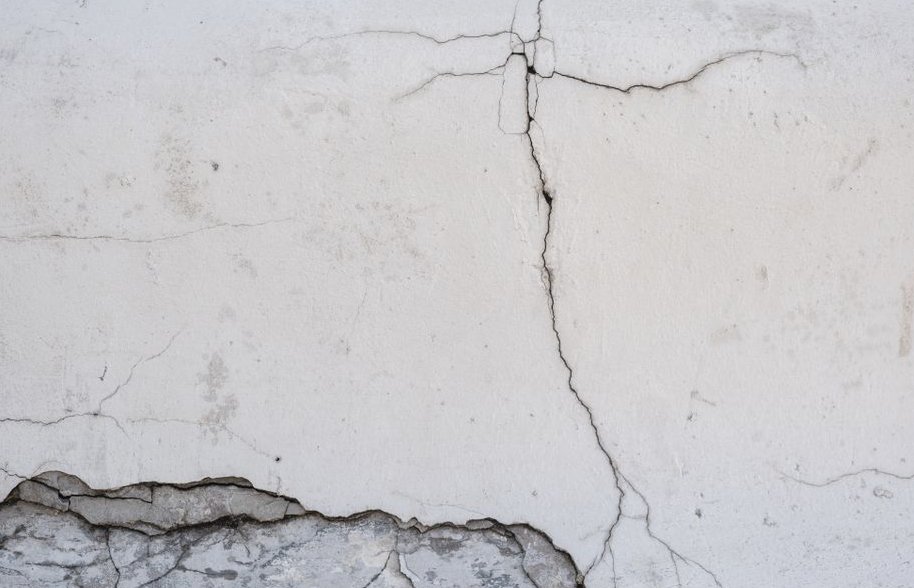
You'll usually spot them before we do. Lines running out from the edge of a driveway. Cracks that wander across the middle of a lot instead of following a straight line. Ones that still look damp a day or two after the rain stops. The occasional winter freezes we get in Dalton bring some freeze-thaw movement, and that's when a crack you shrugged at in October is one you can fit a finger into by March.
If a crack has already been filled once and has opened back up along the same line, that tells us something about the prep that went into it the first time. If the edges are crumbling instead of tight, that tells us something else.
Why the crack keeps coming back
Filling a crack is easy. Getting one to stay filled is the actual work. A crack is a symptom — the movement that opened it is still happening underneath. Seal over a line that's still shifting and it opens right back up on you, usually within a season or two.
Water is what worries us more than the crack itself. Once a break is open, water has a path in, and asphalt doesn't drain from the inside out the way a lawn does. So it sits there. That's how a line turns into a soft spot, and a soft spot turns into a job several times the size of the one you called about. Most of what we see is a crack that's been open a couple of winters and has started breaking down at the edges.
How we read a driveway
We walk the surface to see what we're dealing with. Not every crack is the one that needs to go first. A tight hairline in a surface that drains well may still be holding fine, and we'll tell you that instead of selling you a job you don't need yet. A crack wide enough to hold a pencil, or one where the asphalt has started to fall in, requires immediate attention.
If you want a straight answer on your own asphalt, request an estimate and we'll walk it with you and tell you what we'd do.
Cleaning it out before anything goes in
Nothing sticks to dirt, and a crack is a dirt collector. Leaves, sand, grass clippings, grit — it all ends up in there. Fill over the top of that and you've filled the crack with a plug sitting on loose material. It'll pop out.
We clean first, and we don't cut corners on it. You can usually tell a job that skipped this step. The fill looks fine for a season, then comes out in chunks and the crack is right back where it started — except now it's wider and it's got old sealant crumbs mixed into it.
When the damage is wider than a crack
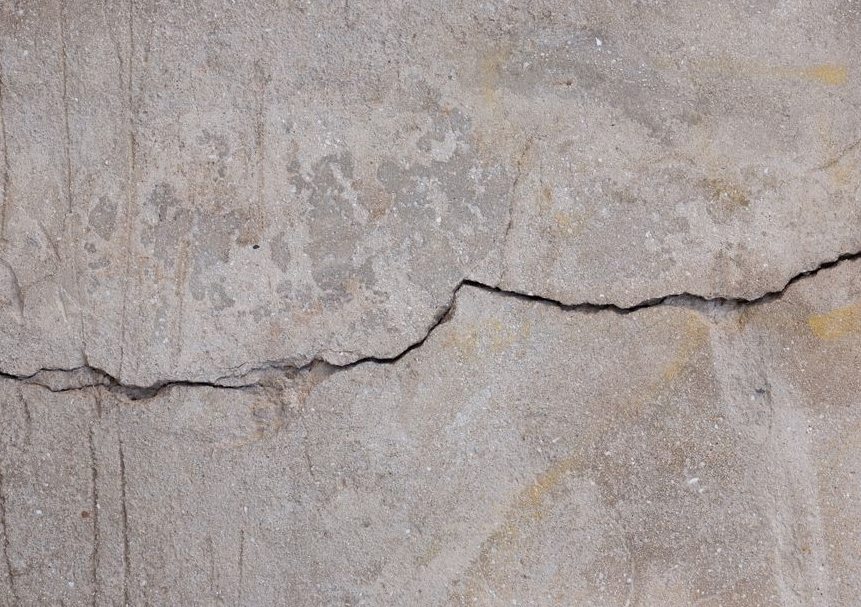
Sometimes the crack is just a crack and sealing is the entire job. Other times it's the edge of something bigger, and once we start looking, the failure runs wider than the line itself. That's when we move to infrared asphalt repair instead of a fill.
Same discipline, bigger footprint. We clean the surface with mechanical brooming, air, or water, then apply tack coat uniformly across it. We let the emulsion break before any hot mix goes down. Placing mix over tack that hasn't broken is how you get a repair that delaminates, so we wait it out.
From there it's compaction. We use a vibratory steel-wheel roller for the breakdown pass and a static steel-wheel finish roller to take the marks out and leave a tight, even surface. You can't rush compaction and you can't fake it — a repair that wasn't rolled properly shows itself in a year or so, and it usually shows up as a crack again.
What the work costs
Infrared asphalt repair runs $2 to $6 per square foot. Where you land in that range depends on how much area we have to open up and how far the failure runs once we're into it. A tight repair on one section sits at the low end. A repair that keeps growing as we expose it climbs.
Straight crack sealing is a smaller job, and we quote it after we've walked the surface and counted what's actually there — how many lines, how long they run, how deep they're cut. A driveway with three cracks and a lot with thirty are not the same estimate, and we'd rather see it than guess at it over the phone.
We're paving contractors, so if the work turns out to be bigger than sealing, we're set up to handle it rather than hand it off.
See the Work
A representative look at the kind of work this covers.

Getting Started Is Simple
-
Call or Text
Tell us what you're seeing and when it started — you'll get a straight answer, not a sales pitch.
-
On-Site Inspection
A tech inspects the problem in person — no guessing from photos, no drive-by quotes.
-
Clear, Written Quote
You get the scope and the price in writing before any work starts. No surprises.
-
We Do the Work
Our crew does the work, checks it, and leaves the site clean. You see everything we did.
What this typically involves:
- Before an overlay, repair pavement failures, patch potholes, and thoroughly sweep debris from the surface. [S5]
- Apply tack coat to the clean surface with a calibrated distributor; set the spray bar and nozzles for uniform double or triple overlap. [S4][S5]
What It Typically Costs
Typical ranges, not a fixed price - the exact number is confirmed in writing before work starts.
$7–$13
$3–$7
Related Services
Areas We Serve
Based in Dalton, GA. Call (762) 219-8412 to confirm coverage for your address.
Why Dalton Homeowners Call
- Free EstimatesYou pay for work, never for the quote.
- Scheduling that respects your timeA real window, and we keep to it.
Need help today? Call (762) 219-8412.